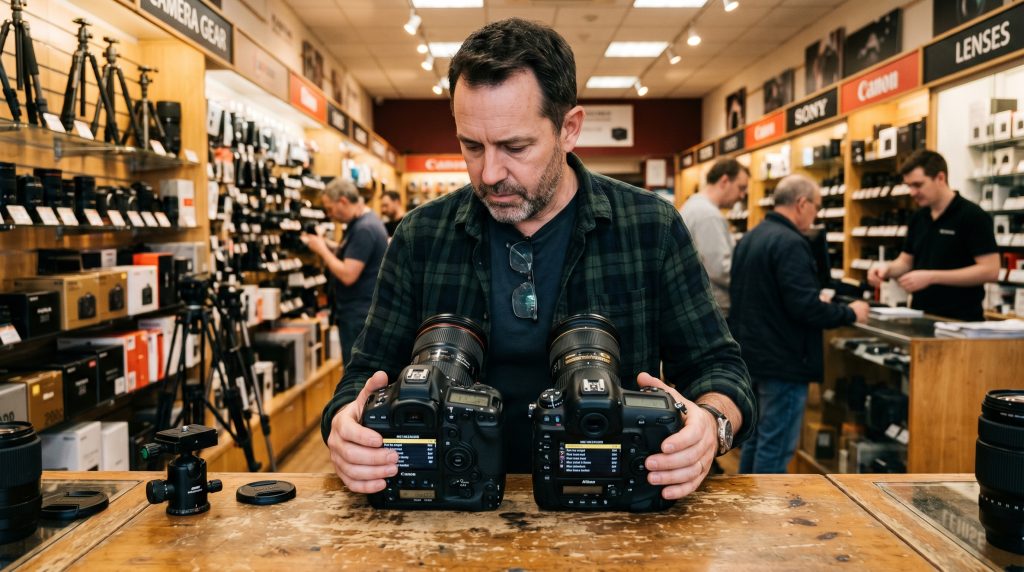
The Ultimate Guide to the Best DSLR Camera for Beginners 2026
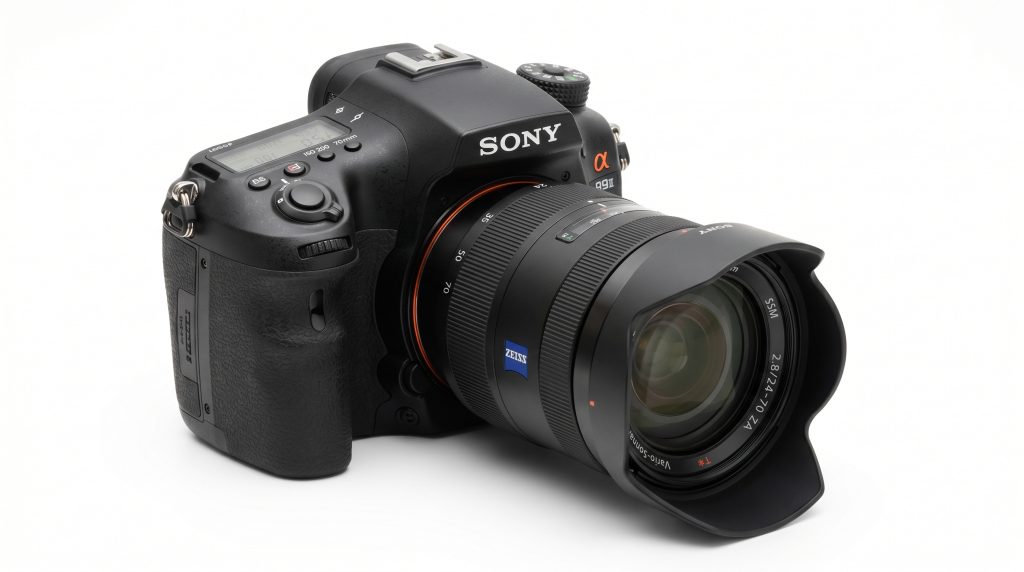
So you want to buy your first DSLR camera. Welcome to the club! You are about to enter a world where people debate lens coatings at dinner parties. Where “ISO” is not a Greek island. And where your wallet will cry a little. But do not worry. This guide will help you find the best DSLR camera for beginners without the stress. We will keep it simple. We will keep it fun. And we will not talk about f-stops until you are ready.
What Even Is a DSLR Camera?
Let us start from scratch. DSLR stands for Digital Single Lens Reflex. Big words. Simple idea. Light comes into the lens. A mirror flips up. The sensor catches the shot. You get a photo. Done.
Why do people love DSLRs? Three big reasons. First, you can change lenses. Wide angle for mountains. Zoom for birds. Macro for bugs. Second, the viewfinder shows real light. Not a screen guess. Third, DSLRs feel good in your hands. They are solid. They click. They make you feel like a pro.
Mirrorless vs DSLR: The Big Fight
You will hear about mirrorless cameras. They are smaller. They are newer. So why pick a DSLR? Easy. DSLRs have more lens choices. They cost less for the same quality. And the battery lasts longer. For a beginner, the best DSLR camera for beginners often beats mirrorless on value.
Think of it this way. A mirrorless is like a sleek sports car. A DSLR is like a trusty truck. Both get you there. But the truck carries more gear for less cash.
Do You Even Need a DSLR?
Be honest. Do you need one? Your phone takes great shots. But a DSLR gives you control. You choose the blur. You freeze the action. You shoot in the dark. If that sounds fun, you are in the right place.
What to Look For in the Best DSLR Camera for Beginners
Specs can confuse anyone. Here is what matters most when you shop for your first camera.
Sensor Size: The Heart of the Image
The sensor catches light. A bigger sensor means better photos in dim rooms. Most beginner DSLRs use an APS-C sensor. It is small but sharp. Full-frame sensors are bigger. They cost more. For now, APS-C is your friend.
Megapixels: More Is Not Always Better
Ads scream “24 megapixels!” Do you need that many? Not really. For prints, web shots, and social feeds, 20 to 24 megapixels is plenty. More megapixels just mean bigger files. And bigger files fill your memory card fast.
Autofocus: Catch the Action
Kids run. Pets zoom. Sports move. You need fast autofocus. Look for at least 9 cross-type points. More points help you lock focus on moving things. This is key if you shoot sports or wildlife.
Battery Life: Do Not Get Stranded
Nothing kills a photo day like a dead battery. DSLRs use optical viewfinders. They sip power. Most beginner DSLRs last 600 to 800 shots per charge. Some last 1,000. That is a full day of fun.
Weight and Grip: Hold It First
A heavy camera hurts your neck. A light one feels cheap. Go to a store. Hold the grip. Press the buttons. If it feels right, it is right. The best DSLR camera for beginners is one you want to carry.
The Top 7 Best DSLR Cameras for Beginners in 2024
Here we go. These picks balance price, ease of use, and room to grow.
1. Canon EOS Rebel T8i / 850D
This is the gold star pick. It has a 24.1-megapixel APS-C sensor. The autofocus is fast with 45 cross-type points. The screen flips and tilts. Video shoots 4K. And the menus are clear. Canon’s guide mode talks you through settings. Perfect for new hands.
- Sensor: 24.1 MP APS-C
- AF Points: 45 cross-type
- Video: 4K at 30fps
- Battery: ~800 shots
- Weight: 515 g (body only)
Price sits around $750 with a kit lens. A fair deal for the tech you get.
2. Nikon D5600
Nikon makes this list twice. The D5600 is light. It weighs just 465 g. The flip-out screen is great for selfies. The SnapBridge app sends photos to your phone fast. The image quality is warm and rich. Many Nikon lenses are cheap and sharp. This makes growth easy on your budget.
- Sensor: 24.2 MP APS-C
- AF Points: 39
- Video: 1080p at 60fps
- Battery: ~970 shots
- Weight: 465 g (body only)
You can find this body for $500 to $600. A top value pick.
3. Canon EOS Rebel SL3 / 250D
This is the smallest DSLR Canon makes. It fits in a big coat pocket. Do not let the size fool you. It has a 24.1 MP sensor. It shoots 4K video. And it has the same easy menu as the T8i. If you travel a lot, this is your camera.
- Sensor: 24.1 MP APS-C
- AF Points: 9
- Video: 4K at 24fps
- Battery: ~1,070 shots
- Weight: 449 g (body only)
Price is near $550. Great for vlogging too.
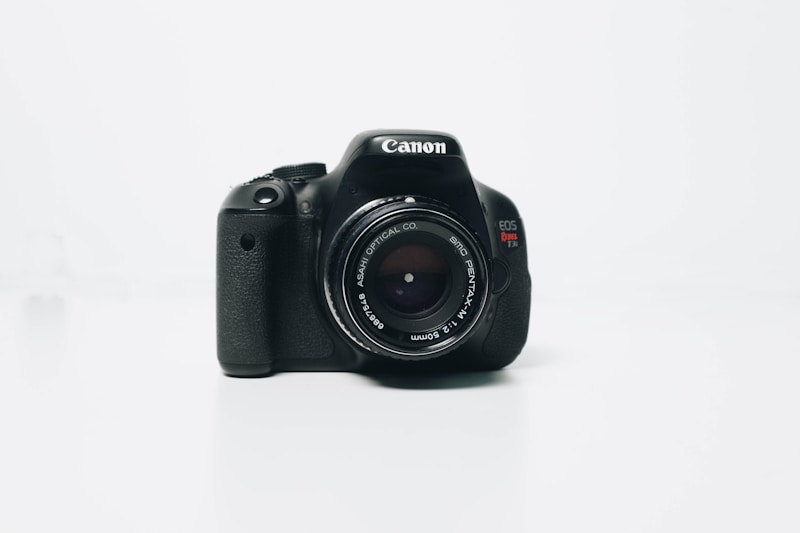
4. Nikon D3500
The budget king. Nikon made this to win new shooters. The Guide Mode teaches you as you shoot. The buttons are simple. The grip is deep and comfy. And the price? Often under $400 with a kit lens. If you want the best DSLR camera for beginners on a tight budget, look here.
- Sensor: 24.2 MP APS-C
- AF Points: 11
- Video: 1080p at 60fps
- Battery: ~1,550 shots
- Weight: 415 g (body only)
Battery life is insane. You can shoot all day and still have juice left.
5. Pentax K-70
Pentax flies under the radar. That is a shame. The K-70 is weather sealed. Rain? Dust? No shakes. It has in-body image stabilization. This means sharper shots with any lens. And it costs less than rivals.
- Sensor: 24.2 MP APS-C
- AF Points: 11
- Video: 1080p at 30fps
- Battery: ~410 shots
- Weight: 688 g (body only)
Price is near $500. A bold pick for outdoor fans.
6. Canon EOS 90D
This is the “grow with me” pick. It is a bit more advanced. But if you know you love photos, start here. The 90D has a 32.5 MP sensor. It shoots 10 frames per second. And the AF is pro-level. You will not outgrow this fast.
- Sensor: 32.5 MP APS-C
- AF Points: 45 cross-type
- Video: 4K at 30fps
- Battery: ~1,300 shots
- Weight: 701 g (body only)
Price is near $1,100 body only. A long-term friend.
7. Nikon D7500
Nikon’s mid-range star. It takes tech from the pro D500. You get a 20.9 MP sensor. You get 4K video. You get a tough build. And the AF is fast. This camera handles low light like a champ.
- Sensor: 20.9 MP APS-C
- AF Points: 51 cross-type
- Video: 4K at 30fps
- Battery: ~950 shots
- Weight: 720 g (body only)
Price is near $900. A sweet spot for keen learners.
How to Choose: A Simple Match Guide
Still stuck? Use this quick guide.
If You Want the Easiest Start
Pick the Nikon D3500. Guide Mode walks you through each step. It is cheap. It is light. It is forgiving.
If You Want the Best All-Rounder
Grab the Canon EOS Rebel T8i. It does everything well. Photos. Video. Selfies. Action.
If You Travel a Lot
The Canon Rebel SL3 wins. Small size. Long battery. 4K video.
If You Shoot Outdoors
Choose the Pentax K-70. Weather sealing. Stabilization. Tough build.
If You Want to Grow Fast
Get the Nikon D7500 or Canon 90D. These cameras will not limit you for years.
Essential Lenses for Your First DSLR
The kit lens is fine to start. But soon you will want more. Here are three lenses every beginner should know.
The Kit Lens: 18-55mm
This lens comes with most beginner DSLRs. It covers wide to short zoom. It is light. It is cheap. It teaches you what you like to shoot.
The Nifty Fifty: 50mm f/1.8
This lens is a must-buy. It costs about $100. It makes backgrounds blur. It shoots great in low light. And it is sharp as a tack. On an APS-C body, it acts like a short portrait lens. Buy one. You will love it.
The Superzoom: 18-200mm or 18-300mm
One lens to rule them all. You can shoot a wide scene. Then zoom in on a bird. No lens swap needed. It is not perfect. But it is fun for travel.
Must-Have Accessories for Beginners
Cameras need friends. These items help you shoot better.
Memory Card: Do Not Skimp
Buy a fast SD card. Look for UHS-I with at least 30 MB/s write speed. 64 GB is a good start. Always carry a spare.
Extra Battery
One battery dies at the worst time. Buy a spare. Charge both the night before a shoot.
Camera Bag
Protect your gear. Pick a bag with padding. Make sure it fits your body and at least one lens.
Lens Cleaning Kit
Dust happens. A blower and a soft cloth keep your lens clean. Never use shirt fabric. It can scratch.
Tripod
For night shots and videos, a tripod is key. Start with a cheap one. You can upgrade later.
Common Beginner Mistakes (And How to Avoid Them)
We all make these. Learn from them now.
1. Shooting Only in Auto Mode
Auto mode is safe. But it is boring. Try Aperture Priority mode. It lets you blur backgrounds. The camera handles the rest. It is easy and fun.
2. Ignoring Light
Light makes the photo. Shoot in the golden hour. That is the hour after sunrise and before sunset. The light is soft. The colors glow. Your photos will pop.
3. Shaking the Camera
Blurry photos suck. Hold the camera with both hands. Press the button slowly. Or use a tripod. Steady hands win.
4. Not Backing Up Photos
Memory cards fail. Copy photos to your computer. Then back up to the cloud. Do this every shoot day.
5. Buying Too Much Gear Too Fast
Do not buy ten lenses at once. Start with one. Learn it well. Then add more. The best DSLR camera for beginners is the one you use often.
Learning Resources for New DSLR Users
Free help is everywhere. Use it.
YouTube Channels
Search for “DSLR basics” or your camera model. Channels like Peter McKinnon, Tony Northrup, and Jared Polin make simple videos. Watch one a day. You will learn fast.
Camera Manual
Yes, read the manual. It sounds boring. But it answers 90% of your questions. Keep it in your bag.
Local Photography Groups
Find a group in your town. Join a photo walk. Real people give real tips. Plus, it is fun.
Practice Projects
Try a photo a day. Pick a theme. Monday: shadows. Tuesday: red things. This builds skill fast.
DSLR vs. Smartphone: When Does a DSLR Win?
Phones are great. But DSLRs still win in key areas.
Low Light
Phone photos get grainy in dim rooms. DSLRs stay clean and sharp.
Fast Action
Phones miss focus on moving kids or pets. DSLRs lock on and fire fast.
Background Blur
Phones fake blur with software. DSLRs create real, creamy blur with wide apertures.
Print Size
Want a big print? DSLR files have more detail. They look sharp on a wall.
Budget Breakdown: What Should You Spend?
Money matters. Here are three budget levels.
Tight Budget: $400 to $500
Get the Nikon D3500 with a kit lens. Add a 50mm f/1.8 later. You will have a solid start for under $700 total.
Mid Budget: $700 to $900
Grab the Canon T8i or Nikon D7500 with a kit lens. You get more power. More room to grow.
High Budget: $1,000 to $1,300
Buy the Canon 90D body only. Pair it with a 50mm f/1.8 and a good zoom lens. You are set for years.
Future-Proofing: Will Your Camera Grow With You?
A good camera lasts years. But tech moves fast. Here is how to stay happy longer.
Lens Ecosystem
Canon and Nikon have huge lens lists. You can find cheap used glass. This keeps costs low as you learn.
Firmware Updates
Some cameras get new features via updates. Check if your model supports this. It adds life to your gear.
Resale Value
Canon and Nikon bodies hold value well. If you upgrade later, you can sell your old one easily.
Real Talk: When to Upgrade from Your First DSLR
You will know when it is time. Here are the signs.
- You shoot in manual mode with ease.
- The camera is too slow for your action shots.
- You need more dynamic range for landscapes.
- Video features feel limited.
- You crave full-frame quality.
When these hit, it is time for a pro body. But enjoy the ride until then.
FAQ: Best DSLR Camera for Beginners
1. What is the best DSLR camera for beginners in 2026?
The Canon EOS Rebel T8i is the top pick. It is easy to use. It shoots great photos and 4K video. It also has fast autofocus. For a lower price, the Nikon D3500 is a strong second.
2. Is a DSLR better than a mirrorless for beginners?
DSLRs cost less for the same image quality. They have more lens options. They also last longer on one charge. Mirrorless is the future. But DSLRs are the best value now.
3. How much should I spend on my first DSLR?
Plan for $500 to $800 with a kit lens. This gets you a solid body and a starter lens. Add a 50mm f/1.8 for $100 later. That is all you need at first.
4. Do I need a full-frame camera as a beginner?
No. Full-frame cameras cost more. They are bigger. An APS-C sensor is fine for learning. It also uses cheaper lenses.
5. What lens should I buy first?
Start with the kit 18-55mm lens. Then buy a 50mm f/1.8. It is cheap and sharp. It teaches you about light and blur.
6. Can I shoot video with a beginner DSLR?
Yes. Most beginner DSLRs shoot 1080p. Some shoot 4K. The Canon T8i and Nikon D7500 handle video well. Use a tripod for smooth clips.
7. How long does a DSLR last?
With care, a DSLR lasts 5 to 10 years. The shutter may wear after 100,000 shots. But most beginners never hit that. Keep it dry. Keep it clean. It will serve you well.
8. Should I buy a used DSLR?
Yes. Used cameras save money. Buy from trusted shops. Check the shutter count. A used D5600 or T7i is a smart buy.
Final Thoughts: Your First DSLR Awaits
Choosing the best DSLR camera for beginners does not need to be hard. Pick one from this list. Hold it in a store. If it feels right, take it home. Then go shoot. Shoot trees. Shoot your dog. Shoot your lunch. Shoot the moon.
Your first camera is special. It opens a new way to see the world. Mistakes will happen. Blurry shots. Bad light. Wrong settings. That is okay. Every pro started where you are now.
So grab a camera. Step outside. And click that shutter. Your story is waiting to be told. One frame at a time.